
Event teams obsess over live attendance. However, they often focus on the wrong metrics. How many people registered? How many showed up? How full were the rooms?
Although these numbers seem important, they do not capture real impact. Instead, the true value of an event happens after it ends. On-demand viewership continues for weeks or even months. Yet, most events fail to capture this extended value.
So, here is why on-demand event content matters more and how to build a strategy that delivers results.
The Shift From Live to On-Demand
Live attendance peaked years ago. Even now, hybrid and virtual formats have not solved the core problem. Most attendees can only watch a small portion of an event in real time. They miss sessions due to conflicts, time zones, or overlapping tracks.
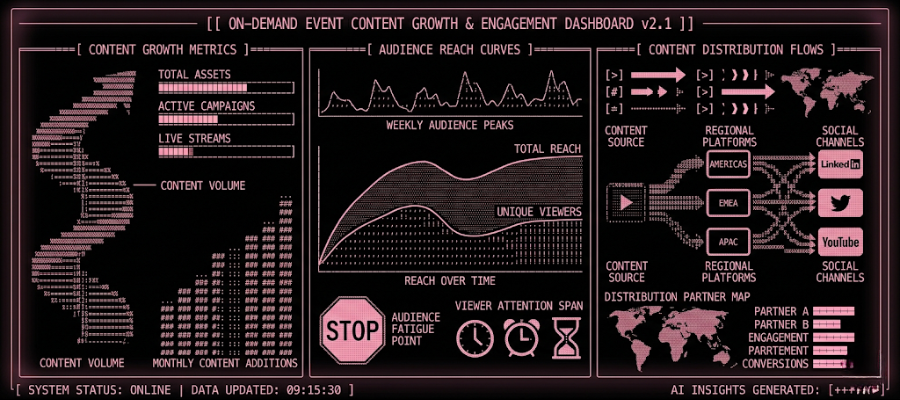
On-demand content changes this dynamic. For example, a session with 200 live attendees can reach 2,000 more viewers over time. As a result, the same content delivers ten times the impact.
Therefore, events that adapt to this shift gain a clear advantage. Meanwhile, others continue to measure success using outdated metrics.
Why Traditional On-Demand Strategies Fail
Most teams publish recordings, but the execution falls short. In fact, three common mistakes limit performance.
First, long recordings reduce engagement. A 60-minute video rarely holds attention. Instead, viewers prefer shorter, focused formats.
Second, hidden portals block discovery. When content sits behind logins, fewer people access it. As a result, engagement drops significantly.
Third, lack of context creates friction. Without summaries, highlights, or tags, viewers cannot find relevant content quickly.
Because of these issues, valuable content goes unwatched.
Building an On-Demand Content Strategy That Works
A strong strategy treats recordings as raw material. Then, it transforms them into multiple content formats.
Step 1: Process Every Session
Start by using AI to transcribe and summarize sessions in real time. By the end of the event, you should already have structured, searchable content.
Without this step, content remains inaccessible.
Step 2: Create Multiple Formats
Next, break each session into multiple formats. For instance, offer full recordings for depth and short highlights for quick insights. In addition, include written summaries, quote cards, and topic-based clips.
This approach ensures that different audience preferences are covered.
Step 3: Make It Discoverable
Then, focus on discoverability. Tag content by topic, speaker, and theme. Also, enable search across all past events.
For example, a search for “supply chain risk” should return all relevant sessions across your archive.
Step 4: Push Content to Your Audience
Finally, distribute content proactively. Instead of waiting for users, send personalized recommendations. Share summaries via email and highlight insights on social channels.
This keeps your content visible long after the event ends.
Measuring On-Demand Success
Instead of focusing on live attendance, track deeper metrics.
First, measure total content reach over time. Then, analyze engagement depth to see which content performs best. Next, review search activity to understand audience interests. Finally, track new audience acquisition beyond registered attendees.
Together, these metrics provide a complete view of event impact.
How Snapsight Powers On-Demand Strategy
Snapsight captures sessions in real time using transcription, summarization, and topic analysis across 75+ languages. As a result, it automatically generates structured, multi-format content.
With 627+ events and 10,415+ sessions processed, the platform turns events into scalable content engines. Since the AI operates 91% autonomously, teams can build on-demand libraries without additional workload.
Key Takeaways
- Live attendance shows only part of event value
- On-demand content extends reach by up to 10x
- Most strategies fail due to poor formatting and distribution
- A strong approach includes processing, formatting, and discoverability
- Better metrics reveal the true impact of events