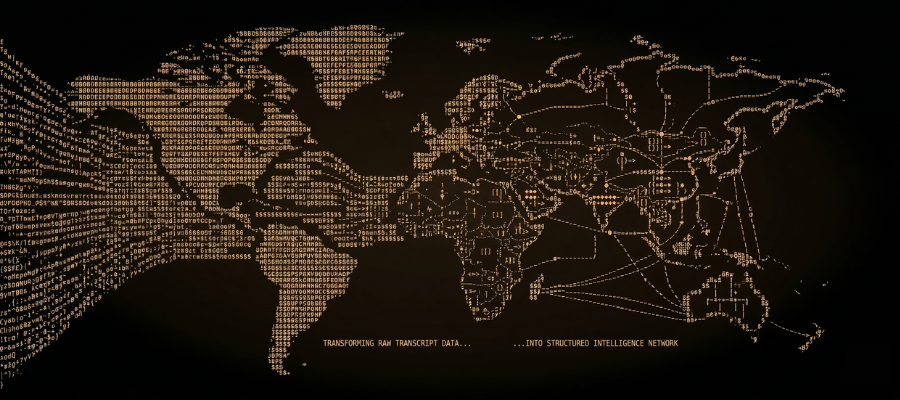

Event Intelligence vs Event Transcription: Key Differences
The debate around event intelligence vs. event transcription is no longer theoretical. For modern conferences, enterprise summits, and large-scale exhibitions, the difference between passive documentation and real-time strategic insight directly impacts measurable business outcomes. While transcription captures what was said, event intelligence analyzes what matters as it happens.
In an era where data-driven organizations consistently outperform competitors, relying only on post-event transcripts is increasingly insufficient. The shift toward real-time event analysis and streaming event analytics represents a fundamental change in how event content generates business value.
Event Intelligence vs Event Transcription: Core Structural Differences
At first glance, transcription and intelligence may appear similar. Both convert speech into text. Operationally, however, they function at entirely different levels.
Event Transcription
Event transcription:
- Converts audio into text
- Is delivered after sessions conclude
- Produces static output
- Does not extract insights
- Requires manual review for strategic use
Event Intelligence
An event intelligence platform:
- Processes content in real time
- Identifies themes, patterns, and key takeaways
- Generates summaries instantly
- Detects emerging trends across sessions
- Enables immediate action
This is the core difference in event intelligence vs. event transcription. One documents content. The other interprets and activates it.
The Limits of Traditional Event Transcription
Traditional transcription operates in batch mode.
- Record the session
- Process the audio
- Deliver the transcript hours or days later
By the time stakeholders receive transcripts:
- Engagement momentum has declined
- Strategic opportunities have passed
- Marketing teams cannot capitalize quickly
- Insights require manual extraction
Research from McKinsey & Company shows that organisations using real-time data outperform peers in agility and customer acquisition. Static transcripts do not provide that advantage.
Transcription answers the question, What was said?.
Event intelligence answers: What does it mean, and what should we do next?
Why Real-Time Event Analysis Drives Strategic Outcomes
The advantage of real-time event analysis lies in speed to insights.
When intelligence is generated during the event:
- Marketing teams extract quotes immediately
- Organizers identify trending topics live
- Sponsors understand audience interests in real time
- Speakers refine messaging dynamically
Insights discussed by Gartner highlight how organisations that act on streaming analytics outperform those relying on retrospective reporting.
Streaming event analytics turns event content into an actionable strategy while attention is still close.
Transcription vs Intelligence: Business Impact Comparison
| Dimension | Event Transcription | Event Intelligence Platform |
|---|---|---|
| Timing | Post-event | Real-time |
| Output | Raw text | Insights and summaries |
| Strategic Value | Limited | High |
| Marketing Utility | Delayed | Immediate |
| Trend Detection | Manual | Automated |
| ROI Measurement | Basic | Continuous |
An event intelligence platform converts live content into structured, actionable data streams.
This comparison clarifies the broader debate of transcription vs. intelligence. The difference is architectural, not incremental.
How Streaming Event Analytics Strengthens Customer Acquisition
Organizations that implement real-time analytics across digital channels often see stronger acquisition outcomes. Research referenced by HubSpot shows that companies leveraging timely, data-informed strategies consistently outperform reactive competitors.
Applied to events, this enables:
- Faster content repurposing
- Immediate session summaries
- Personalized attendee follow-ups
- AI-driven theme clustering
- Clear sponsor reporting
Instead of waiting days for documentation, teams deploy insights while engagement is highest. This is the operational advantage in event intelligence vs. event transcription.
The Role of an Event Intelligence Platform
A modern event intelligence platform does more than transcribe speech.
It delivers:
- Real-time multilingual summaries
- Idea clouds and theme clustering
- Cross-session insight mapping
- Instant speaker highlights
- Searchable knowledge archives
This shifts event operations from capturing information to activating it.
Event Intelligence vs Event Transcription in 2026 and Beyond
As conferences grow in scale and complexity, reliance on raw transcripts will continue to decline.
The modern event stack increasingly requires:
- Real-time event analysis
- Automated insight extraction
- Streaming event analytics
- Continuous ROI measurement
In this environment, event intelligence vs. event transcription becomes a strategic decision about whether content is archived or turned into a growth asset.
Conclusion
Transcription records the past.
Event intelligence shapes the present.
For organizations focused on measurable ROI, sponsor value, and scalable knowledge capture, event intelligence vs. event transcription defines how effectively live content translates into business growth.